How Long After Wisdom Teeth Removal Can I Eat a Burger?
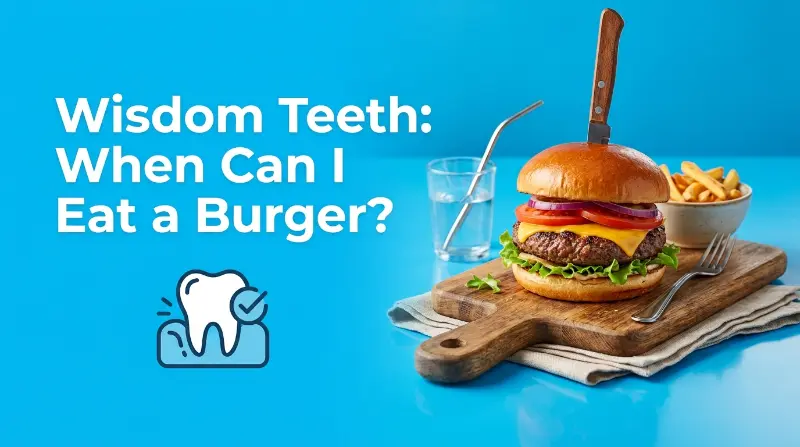
Craving a juicy burger after getting your wisdom teeth pulled is completely normal — but jumping back into heavy chewing too soon can seriously derail your healing. For most people who had an uncomplicated extraction, a burger is safe to attempt around two weeks (about 14 days) after surgery. If your teeth were impacted or required bone removal, you may need to wait three to four weeks. This guide walks you through a realistic day-by-day timeline, the foods to eat and avoid, and how to protect the fragile blood clot that keeps dry socket away.
These timelines are general guidance and vary from person to person and by how difficult your extraction was. Always follow your own oral surgeon’s specific post-op instructions.
So, When Can You Actually Eat a Burger? (Quick Answer)
A burger is not an early recovery food. It demands heavy, repeated chewing that can disturb the healing socket. After a straightforward extraction, most oral surgery practices suggest attempting a soft burger around the two-week mark. After a difficult or surgical extraction — impacted teeth or cases involving bone removal — wait three to four weeks. Chewier solids are typically reintroduced around days five to seven, and most normal foods return by week two, though hard, crunchy, and sticky items should still be delayed a bit longer.
What Is Your Day-by-Day Recovery Timeline?
Recovery follows a predictable progression from liquids to soft foods to gradual solids. The overall return-to-normal-diet window ranges from about three days to two weeks depending on your case. Rushing any stage risks pain and complications, so let comfort guide you.
Days 1–2: Liquids & Very Soft Foods
For the first 48 hours, stick to liquids and very soft foods that require no chewing. Good choices include yogurt, mashed potatoes, lukewarm blended soup, applesauce, smoothies, mashed banana, and ice cream. Never use a straw, and skip anything with small seeds. Suction from a straw can dislodge the blood clot, which is the single most common cause of dry socket in these early days.
Days 3–7: Soft Foods
By day three, you can move to soft foods that need only minimal chewing. Scrambled eggs, oatmeal, well-cooked pasta, soft cooked vegetables, avocado, hummus, cottage cheese, and soft crustless bread are all reliable options. Chew on the opposite, non-surgical side whenever possible. This stage is still far too early for a burger — the socket is only beginning to close.
Week 1–2: Easing Back to Solids
During the second week, gradually reintroduce solid foods as the extraction site heals. Most people can handle a regular diet by the end of week two. The rule is simple: if eating something hurts, drop back to soft foods for another day or two and try again later. Pushing through sharp pain is a warning sign, not a milestone.
When Can You Eat a Normal Burger?
A normal burger fits best at the end of that two-week window for uncomplicated cases. Because a burger involves dense patty texture and a chewy bun, it sits near the finish line of soft-food recovery rather than the start. If your extraction was surgical, give yourself the full three to four weeks before biting into one.
| Timeframe | Foods |
| Days 1–2 | Liquids, very soft |
| Days 3–7 | Soft foods |
| Week 1–2 | Gradual solids |
| ~2 weeks | Try burger |
Why Do You Have to Wait? (The Blood Clot & Dry Socket)
After extraction, a blood clot forms inside the empty socket, and that clot is essential for healing — it protects the underlying bone and nerves while new tissue grows. Dry socket, medically called alveolar osteitis, happens when this clot dislodges, dissolves, or fails to form, leaving bone and nerves painfully exposed. It occurs in roughly 4% of extractions and is far more common after lower wisdom teeth removal.
Heavy chewing from a burger can dislodge that clot before it is ready. To protect it, avoid straws, smoking, spitting, and vigorous rinsing for the first 24 hours. After 24 hours, gentle warm salt-water rinses are encouraged. Always chew on the opposite, non-surgical side while the socket heals.
What Foods Should You Avoid While You Heal?
Certain foods and habits threaten the clot or irritate the wound. Avoid crunchy and crumbly items like chips, popcorn, and crackers, which leave sharp fragments in the socket. Steer clear of chewy, hard, or sticky foods, plus spicy dishes and acidic foods such as citrus and tomato that sting healing tissue.
Small seeds and nuts are especially risky because they lodge inside the open socket. Also skip very hot foods, alcohol, and straws entirely during early recovery. A sesame-seed bun is a hidden hazard for exactly this reason — those tiny seeds can settle into the extraction site.
How Do You Eat Your First Burger Safely?
Around two weeks in, you can try your first burger with a few precautions. Take small bites and pull the patty into small pieces rather than biting through a full stack. Chew slowly on the opposite, non-surgical side. Choose a soft bun with no sesame seeds and a soft, well-cooked patty that breaks apart easily.
Skip hard toppings such as raw onion and pickles, which add crunch and force. If any part of the process hurts, stop immediately and return to soft foods for a day or two. There is no prize for finishing the burger — a protected socket is the goal.
What Are the Signs of Dry Socket or Infection?
Dry socket usually announces itself with severe, throbbing pain that begins about two to four days (48–72 hours) after surgery and worsens over time, often radiating to the ear, temple, or neck. You may see an empty-looking socket with visible bone, along with bad breath or a foul taste in your mouth.
Infection presents differently: fever or chills above roughly 100.4°F, pain that increases after you were already improving, swelling that grows or spreads, pus or discharge, and a persistent bad taste. Call your surgeon promptly for these signs. Head to the ER if you have trouble breathing or swallowing, a high fever, or fast-spreading swelling moving toward your neck or eye.
Frequently Asked Questions
How long after wisdom teeth removal can I eat a burger?
For an uncomplicated extraction, attempt a soft burger around two weeks (about 14 days) after surgery. If your teeth were impacted or the procedure involved bone removal, wait three to four weeks. Even then, use small bites and chew on the non-surgical side.
Can I eat a burger 3 days after wisdom teeth removal?
No. At three days you should be on soft foods requiring minimal chewing, such as scrambled eggs, oatmeal, or pasta. A burger’s heavy chewing can dislodge the blood clot and trigger dry socket, so it is far too early.
When can I eat solid food again?
Solid foods are gradually reintroduced during the second week as the site heals. Most people return to a regular diet by the end of week two, though hard, crunchy, and sticky foods should stay off the menu a little longer.
Can I eat McDonald’s after wisdom teeth removal?
Fast-food burgers follow the same two-week rule. When you do try one, pull the patty into small pieces, request a plain bun without sesame seeds, and skip hard toppings like pickles and raw onion. Avoid straws with any milkshake.
What happens if I eat solid food too soon?
Eating dense solids too early can dislodge the protective blood clot and expose bone and nerves, causing dry socket — a painful complication affecting about 4% of extractions. Food fragments can also lodge in the socket and lead to infection.
Can I use a straw for a milkshake?
No. The suction created by drinking through a straw can pull the blood clot out of the socket, which is a leading cause of dry socket. Sip milkshakes and smoothies directly from a cup instead, and avoid any small seeds.
How do I know if I have dry socket?
Watch for severe throbbing pain starting two to four days after surgery that worsens and radiates to the ear, temple, or neck. An empty-looking socket with visible bone, bad breath, or a foul taste are other signs. Contact your surgeon if these appear.
Key Takeaways
Wait about two weeks after an uncomplicated wisdom teeth extraction before attempting a soft burger, or three to four weeks after a surgical or impacted extraction. Progress from liquids (days 1–2) to soft foods (days 3–7) to gradual solids (week 1–2). Protect the blood clot by avoiding straws, smoking, spitting, seeds, and hard foods, and always chew on the non-surgical side. Know the warning signs of dry socket and infection, and never push through sharp pain.