
Why Is My Gum Swollen Around One Tooth in the Back?
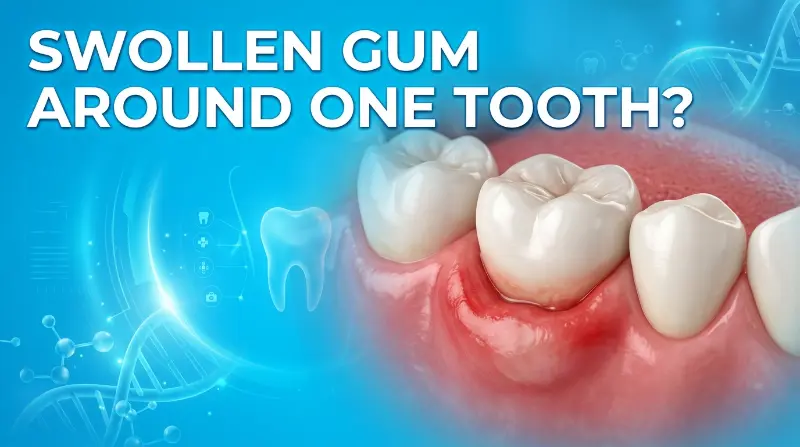
Noticing that the gum around a single tooth at the back of your mouth is puffy, red, and tender can be alarming, especially when the rest of your gums feel fine. Localized swelling around one back tooth is common and usually points to a specific, treatable cause – often trapped food, gum disease at a hard-to-reach spot, or a partially erupted wisdom tooth. Drawing on guidance from the Cleveland Clinic, Healthline, Colgate, WebMD, Medical News Today, and the American Dental Association (ADA), this article explains why one back gum swells, how to ease it at home, and when the problem needs professional care.
This article is for general education and is not a substitute for professional dental advice. See a dentist for any gum swelling that lasts, worsens, or recurs. If you have facial swelling, fever, or trouble breathing or swallowing, seek emergency care right away — a spreading dental infection can become life-threatening.
Quick Answer: Why One Back Gum Swells
Swelling limited to one back tooth almost always has a local trigger rather than a whole-mouth cause. The most frequent reasons are food or a popcorn hull wedged under the gumline, localized gum disease from plaque in a spot that is hard to clean, and pericoronitis around a partially erupted wisdom tooth. A tooth abscess – a pocket of pus from bacterial infection – is a more serious cause that will not clear on its own. Because the back molars are difficult to brush and floss, they collect plaque and debris more easily, which is why isolated swelling shows up there so often.
What Causes a Swollen Gum Around One Back Tooth?
Trapped Food or Popcorn Hull?
A piece of food or a sharp popcorn hull lodged beneath the gumline is one of the simplest causes. The debris irritates the tissue and lets bacteria build up, producing local tenderness and puffiness. According to Healthline and Colgate, this type of swelling often resolves within a day or two once the trapped material is removed by careful flossing and rinsing.
Localized Gum Disease (Gingivitis or Periodontitis)?
Plaque and tartar that collect on hard-to-reach back teeth can inflame the gum, causing gingivitis – red, swollen gums that bleed easily. The ADA notes that untreated gingivitis can progress to periodontitis, with deep pockets and gum recession. Gum disease is extremely common: nearly half of US adults age 30 and older have some form of it.
Wisdom Tooth Eruption and Pericoronitis?
A partially erupted wisdom tooth is the most common cause of swelling at the very back of the gum. The tooth leaves a flap of gum tissue called an operculum that traps food and bacteria, leading to pericoronitis — swelling, pain, and a bad taste. The Cleveland Clinic points out that salt-water rinsing can ease the discomfort but does not cure the underlying flap.
Tooth Abscess (Bacterial Infection)?
A dental abscess is a pocket of pus caused by bacterial infection, usually when decay or a cracked tooth reaches the pulp. WebMD describes symptoms of throbbing pain, swelling, and sometimes fever or a salty taste. Critically, an abscess will not resolve on its own and requires prompt dental treatment to drain the infection and prevent it from spreading.
Cracked, Decayed, or Damaged Tooth?
A cavity or a fractured tooth gives bacteria a route into deeper tissue, inflaming the surrounding gum. Medical News Today notes that decay near the gumline can trigger localized swelling and sensitivity even before pain becomes constant, so a swollen gum can be an early warning of a damaged tooth.
A Poorly Fitting Crown or Filling?
A crown, filling, or denture that no longer fits well can trap plaque against the gum and irritate it. Colgate explains that a rough or overhanging edge makes the area harder to clean, so plaque accumulates and the gum around that single restored tooth becomes inflamed until the fit is corrected.
Canker Sore or Gum Irritation?
Sometimes the swelling is simply a canker sore or a reaction to a toothpaste or mouthwash ingredient. This type of localized irritation is usually minor, sits on the gum surface rather than deep around the tooth root, and tends to fade on its own within a week or two.
| Cause | Common Sign |
|---|---|
| Trapped food | Local tenderness |
| Gum disease | Bleeding gums |
| Pericoronitis | Bad taste |
| Abscess | Throbbing pus |
What Symptoms Should You Watch For?
The classic signs are a red, puffy, tender gum around one tooth, often with bleeding when you brush or floss. Many people also notice a bad taste or bad breath, throbbing or sharp pain, and sensitivity when chewing on that side. More concerning signs include visible pus, a gum bump or pimple near the tooth, and receding gum tissue. Pus, a persistent bump, or throbbing pain suggests an infection that needs a dentist rather than home care alone.
How Can You Relieve a Swollen Gum at Home?
Home measures are supportive only – they can ease minor swelling from trapped food but will not cure an infection like an abscess or pericoronitis.
Warm Salt-Water Rinse?
Dissolve about ½ teaspoon of salt in 8 ounces of warm water and swish for 30 seconds, 2–4 times a day. Healthline and the Cleveland Clinic recommend this because salt water reduces bacteria and soothes inflamed tissue, though it treats symptoms rather than the root cause.
Floss and Brush Gently?
Carefully flossing and brushing around the swollen tooth helps clear trapped debris that may be driving the irritation. Use a soft-bristled brush and gentle motions; minor swelling from a lodged food particle often clears once the area is cleaned.
OTC Pain Relief?
Over-the-counter ibuprofen or acetaminophen can manage pain and, in the case of ibuprofen, reduce inflammation. Follow the package dosing instructions, and remember that pain relievers mask symptoms without treating an underlying infection.
Antiseptic Mouth Rinse?
An antiseptic mouthwash can lower the bacterial load around the swollen gum and support healing. Colgate suggests using it alongside good brushing and flossing, not as a replacement for professional care when swelling persists.
When Is a Swollen Gum an Emergency?
Certain signs mean you should not wait. Seek urgent dental or medical care if you have a fever or feel generally unwell, swelling spreading to the face, jaw, or neck, severe or worsening pain, or pus and discharge. Trouble swallowing, breathing, or opening your mouth is a medical emergency. Swelling that lasts more than roughly 1–2 weeks also warrants prompt evaluation. A spreading dental infection can become life-threatening, so go to a dentist or an ER without delay.
When Should You See a Dentist?
Book a dental visit if swelling lasts more than a few days to two weeks, keeps getting worse, recurs, or is joined by a gum bump, severe pain, or any red flag above. Even if the swelling seems mild, a dentist can identify whether the cause is trapped debris, gum disease, a wisdom tooth, or an abscess — and only a professional can drain an infection or clean below the gumline where home tools cannot reach.
How Does a Dentist Treat a Swollen Gum?
Treatment depends on the cause. For gum disease, a dentist provides a professional cleaning or scaling and root planing to remove tartar below the gumline. Trapped debris is cleared directly. Bacterial infections may call for antibiotics, and an abscess is treated with incision and drainage. A tooth with infected pulp may need a root canal, while a cracked or decayed tooth is repaired with a filling or crown. For pericoronitis, the dentist may remove the operculum or extract the wisdom tooth.
How Can You Prevent Swollen Gums Around a Back Tooth?
Prevention centers on consistent oral hygiene, with extra attention to the back teeth that are easy to miss. Brush twice a day, floss daily to remove debris from between molars, and rinse to control bacteria. The ADA recommends regular dental checkups and cleanings to catch plaque buildup and ill-fitting restorations early. Because nearly half of US adults 30 and older have some gum disease, routine professional care is the best defense against recurring back-gum swelling.
Frequently Asked Questions
Why is only one gum swollen?
Swelling around a single tooth usually has a local cause, such as trapped food, plaque buildup at a hard-to-clean spot, a partially erupted wisdom tooth, or an abscess. Because back molars are difficult to reach, isolated swelling commonly appears there.
Will a swollen gum go away on its own?
Minor swelling from trapped food often clears within a day or two once the area is cleaned by flossing and rinsing. Swelling driven by infection, such as an abscess or pericoronitis, will not resolve on its own and needs a dentist.
How long does a swollen gum last?
Irritation from debris may fade in a few days. Any swelling that lasts more than roughly one to two weeks, worsens, or recurs should be evaluated by a dentist, as it likely signals a problem that requires treatment.
Is it a sign of an abscess?
It can be. An abscess is a pocket of pus from bacterial infection and often causes throbbing pain, swelling, and sometimes fever or a salty taste. A gum bump or pus discharge is a strong sign, and an abscess needs prompt dental care.
Does a warm salt-water rinse help?
Yes, as a supportive measure. Rinsing with ½ teaspoon of salt in 8 ounces of warm water, 2–4 times a day, reduces bacteria and soothes the gum. It eases symptoms but does not cure an infection or remove a wisdom-tooth flap.
Can a wisdom tooth cause back-gum swelling?
Yes — a partially erupted wisdom tooth is the most common cause of swelling at the very back of the gum. The gum flap traps food and bacteria, causing pericoronitis with swelling, pain, and a bad taste that usually needs professional treatment.
When is a swollen gum a dental emergency?
Treat it as an emergency if you have fever, facial, jaw, or neck swelling, severe or spreading pain, pus, or trouble swallowing, breathing, or opening your mouth. A spreading dental infection can be life-threatening, so see a dentist or go to the ER.
Reminder: this article is educational and does not replace professional dental advice. Consult a dentist for persistent or worsening gum swelling, and seek emergency care immediately if an infection appears to be spreading.