
How Social Sharing Changes the Way We Evaluate Opportunities
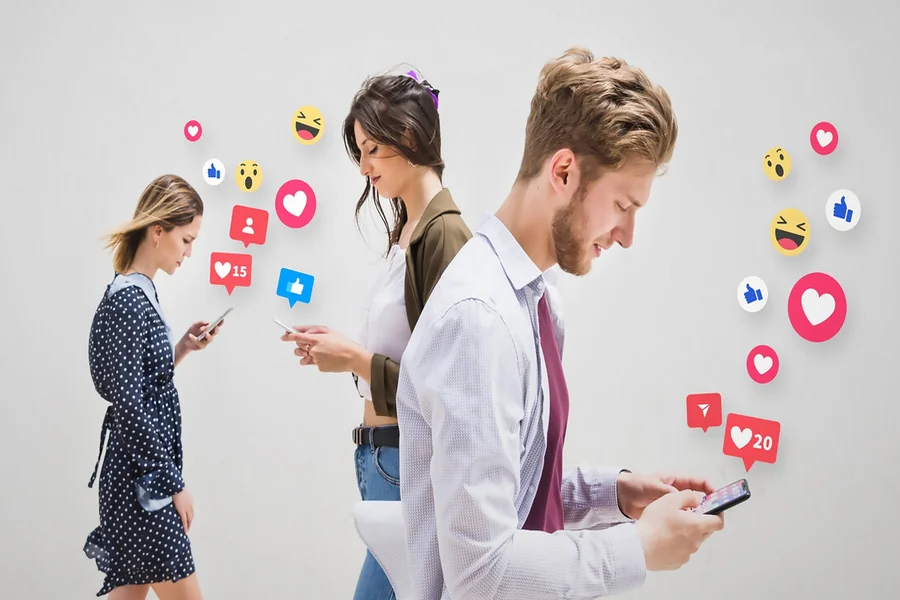
But an opportunity can be quite different to others. It’s more interesting when a product has a thousand likes, more important when its story is trending, and more familiar and credible when its ideas repeat across social feeds. This doesn’t necessarily impact the opportunity itself. It changes how we see it in practice.
This is the psychological concept behind social proof, a phenomenon we see when information is incomplete: When we lack information, we tend to look at what others are doing and judge based on that. With uncertainty and infinite options in a digital world, that shortcut can be powerful.
The Issue of Matters of Personal Judgment to Collective Signals
Picture this: you come across a product you have never used before. Typically, you compare its features, cost, and reviews. However, as soon as you stumble on thousands of people talking about it, posting videos and excited comments, the evaluation process alters!
The brain interprets these reactions as more information. This is similar to the availability heuristic and herd mentality. The more something is seen, the more likely it is to be remembered, and the ease of remembering can be mistaken for importance or quality.
Social sharing also helps to take away some of the thinking time needed for making decisions. Decision fatigue makes it easy to fall for shortcuts, as continuous reminders and competing choices demand attention. People might not ask “Is this really worth it?” but rather “Why are people paying attention to this?”
This quick cut is not necessarily without reason. Information from others’ experiences can be helpful. The trouble is, popularity can replace evidence.
How Digital Platforms Can Use Social Signals as Decision Cues
Collective behavior is very well exposed on modern platforms. Neutral decorations are not “trending,” “most viewed,” “popular,” or “people are talking about this.” They guide attention.
Think of an online shopping site. A new product can suddenly get thousands of ratings and a “popular choice” label. A user’s assessment can change even before they read the specifications. The social signal is out first.
This same concept is evident in entertainment, finance, news, and sports betting forums. Media hype, community opinion, statistics, and predictions can create the impression of momentum behind a given topic. The starting point has shifted, but you can still make an independent judgment.
The effect is greater when it’s personalized with algorithms. Recommendation systems are based upon clicks, viewing time, searches, and previous interactions. They then deliver more of what seems to captivate their listeners.
This creates a cycle: engagement leads to recommendations, and recommendations lead to exposure; exposure can lead to engagement.
What’s Going on in the Brain When People Respond?
In addition to regular evaluation, people receive social feedback. Likes, comments, shares, and reactions can trigger reward-related processes related to anticipation, learning, and motivation.
Here lies the common notion of a dopamine loop in need of complexity. Dopamine is more than just a pleasure chemical. It plays an important role in motivation, reward prediction, learning, and reacting to unexpected changes. If social attention is sporadic, it can become especially focused.
You can get hundreds of reactions on a post or virtually none. A recommendation can all of a sudden go viral. That uncertainty brings rewards to users again and again.
The outcome is a pattern of behavior that processes social information as more than just a bit of information to inform a decision. It can shape what feels important in the first place.
If there’s some fuzziness in the opportunity, these signals can also help minimize perceived uncertainty. When a lot of people look convincing, the brain is going to think they’re convincing, even if the information hasn’t changed.
Take Advantage of Social Sharing in High-Uncertainty Digital Decisions
Social influence is especially interesting when individuals have little information.
Let’s say a new financial trend gets picked up by the social media. People make a bold guess, others echo it, and many posts talk about it. The original claim may not have made any improvements, but its visibility has skyrocketed.
This can show up in sports predictions, limited-time sales, viral items, or new digital services. Direct information may be accompanied by other social signals online, like reviews, community discussions, predictions, etc., depending on the context in which users encounter platforms like PlanBet Canada.
The critical difference is between information regarding an opportunity versus information regarding others’ attention to, or lack thereof, of that opportunity. The second type of social sharing is mainly through social sharing.
When Social Information Helps—and When It Distorts Evaluation
Social information is helpful when it is hard to get first-hand experience. Individuals can learn from reviews about common issues; communities can find helpful resources; and collective experience can uncover information individuals may not know.
However, cognitive bias occurs when what is seen is mistaken for what is true. It’s very easy to have a checklist in your mind: Who is the source of the information? Are the pieces of evidence considered independent or not? Would the results of the sample apply to the entire population? Is an algorithm boosting content due to its usefulness or just due to it getting lots of digital interaction?
The directions for these questions prompt metacognition, thinking about thinking.
When the opportunity is evaluated in an environment where instant gratification and continuous attention are the norm, it becomes more and more common to evaluate two things – the opportunity and whatever social signals are attached to it.