I Am a Gen Z Man. Are Nivea Body Lotions Better Than Vaseline for Dry Skin?
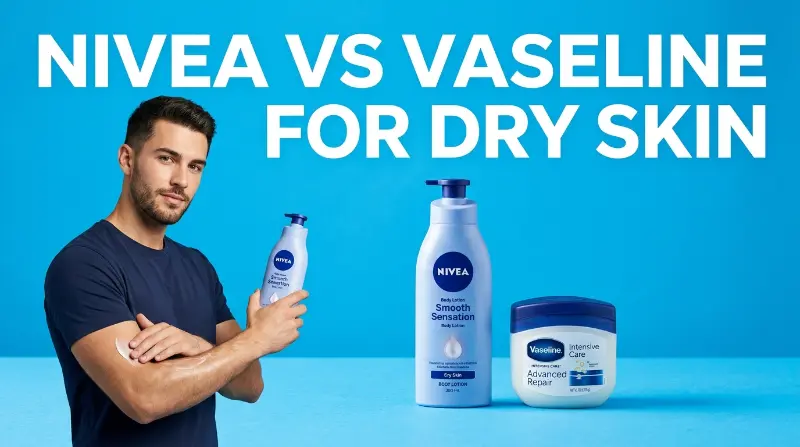
If your shins go dry and ashy by mid-afternoon and you’re standing in the drugstore aisle deciding between the blue Nivea bottle and the Vaseline one, here’s the honest answer up front: both fix dry skin, but they do it differently. Nivea leans on humectants and light oils that soak in fast, while Vaseline leans on petrolatum that seals moisture in. For a Gen Z guy who wants something quick, non-greasy, and cheap, that difference is the whole decision — so let’s break it down with real ingredients and real prices.
Nivea vs Vaseline for Dry Skin: Quick Verdict
Nivea absorbs faster and feels lighter, making it the better everyday, out-the-door lotion. Vaseline is the heavier hitter for very dry, cracked, or winter skin because petrolatum forms a stronger moisture seal. Vaseline is also cheaper per ounce. Here’s the snapshot:
| Factor | Nivea | Vaseline |
|---|---|---|
| How it works | Humectant, oils | Occlusive seal |
| Absorbs | Fast | Sits longer |
| Best for | Everyday dryness | Very dry skin |
| Price | ~$0.65/oz | ~$0.37/oz |
| Scent | Lightly scented | Fragrance-free option |
| Feel | Non-greasy | Greasier |
What’s Actually Causing Your Dry Skin?
Dry skin (xerosis) happens when your skin barrier loses water faster than it can hold it — worsened by hot showers, cold dry air, harsh soaps, and shaving. Body lotion fixes this two ways: humectants (like glycerin) pull water into the skin, and occlusives (like petrolatum) lock it in. Nivea and Vaseline actually both contain glycerin and petrolatum, but they’re balanced differently, which is why they feel and perform so differently.
What Is in Nivea Body Lotion?
Nivea, made by the German company Beiersdorf, builds its lotions around glycerin plus light oils for a fast, non-greasy finish. Prices below are typical US drugstore spot-checks and fluctuate with store and promo.
Nivea Essentially Enriched
The go-to for very dry skin: a 16.9 fl oz pump runs about $8–11 (~$0.65/oz) and packs glycerin, petrolatum, sweet almond oil, sodium hyaluronate, and vitamin E, with a claimed 72-hour moisture and around 20% oils. It’s rich but still soaks in within a minute.
Nivea Cocoa Butter
Also around $8–11 for 16.9 fl oz, this one adds cocoa butter and hyaluronic acid to glycerin and petrolatum for a deeper-nourishing feel on dry-to-very-dry skin — a good pick if you like a slight sheen and a warm scent.
Nivea Soft
The lightweight all-rounder: a 6.8 oz jar is about $8, built on glycerin, jojoba oil, and vitamin E. It works on face, hands, and body, absorbs in seconds, and won an Allure Best of Beauty nod — ideal if you hate any greasy residue.
What Is in Vaseline Body Lotion?
Vaseline (Unilever) leans into petrolatum — the same molecule as its famous jelly — but in a spreadable, faster lotion form. Note these are lotions, not pure petroleum jelly.
Intensive Care Advanced Repair
The value champion: a 20.3 oz bottle is about $7.49 (~$0.37/oz), combining glycerin, micro-droplet petrolatum, shea butter, and dimethicone. It’s fragrance-free and carries the National Eczema Association Seal of Acceptance, making it a safe bet for sensitive or reactive skin.
Cocoa Radiant
Around $6–9 for 20.3 oz, this adds cocoa and shea butter plus niacinamide (vitamin B3) for a glow claim and a warm scent — a fragranced option if you want your lotion to smell like something.
Clinical Care Extremely Dry Skin Rescue
Vaseline’s strongest barrier-repair tier (about $8–10, fragrance-free) is built for cracked, flaky, extremely dry patches — the one to grab when regular lotion isn’t cutting it in deep winter.
Nivea vs Vaseline: What’s the Core Difference?
Boil it down to mechanism. Nivea is humectant-plus-emollient: glycerin draws water in and oils soften the surface, so it feels light and absorbs fast. Vaseline is occlusive-forward: petrolatum lays a breathable seal over the skin that blocks water loss, which is why it’s more effective on severely compromised skin but sits heavier. Neither is “better” in a vacuum — it depends on how dry your skin actually is.
Which One Hydrates Dry Skin Better?
For mild-to-moderate everyday dryness, Nivea wins — the glycerin-and-oil blend rehydrates comfortably without residue. For severe, cracked, or eczema-prone dryness, Vaseline wins because petrolatum is one of the most effective occlusives available, and its Advanced Repair and Clinical Care tiers are formulated at barrier-repair strength. If your skin flakes and cracks in winter, the seal matters more than the soak-in speed.
Which Absorbs Faster (and Less Greasy)?
Nivea, clearly. Most Nivea lotions absorb in roughly 30–60 seconds, so you can dress right away without transfer to your clothes. Vaseline can sit on the surface for several minutes and may leave a residue on sleeves, sheets, or your phone screen. For a fast morning routine, Nivea is the practical choice; save Vaseline for nighttime when greasiness doesn’t matter.
Which Wins on Price and Value?
Vaseline is the better raw value. Intensive Care Advanced Repair works out to about $0.37 per ounce on the 20.3 oz bottle, versus roughly $0.65 per ounce for Nivea. Both are cheap, but if you moisturize head-to-toe daily, Vaseline’s bigger bottles stretch further for the money. Nivea’s premium buys you a nicer texture and scent.
Which Smells Better?
This one’s personal. Nivea has a pleasant, recognizable light fragrance (soft cocoa and almond notes across its range). Vaseline offers genuinely fragrance-free options — Advanced Repair and Clinical Care — which is the smarter route if you have sensitive skin or just don’t want to smell like lotion, plus the scented Cocoa Radiant if you do.
Nivea vs Vaseline: Which Is Better for a Gen Z Man’s Routine?
For a low-effort daily routine, Nivea fits better: it’s fast, non-greasy, and Nivea Soft doubles as a face-and-body moisturizer so you can carry one product. Reach for Vaseline as a targeted fix — dry hands from the gym, cracked knuckles in winter, or an overnight treatment on rough elbows and shins. Many guys run both: Nivea daily, Vaseline when skin gets rough.
Best for Very Dry Skin vs Everyday Use?
Match the product to the severity. Everyday, lightly dry skin after a shower calls for Nivea Soft or Essentially Enriched. Genuinely dry, tight, or flaky skin calls for Vaseline Advanced Repair or Clinical Care, where the stronger occlusive seal does more work. Using a heavy occlusive on skin that isn’t very dry just feels greasy for no benefit.
Winter vs Summer: Which Should You Reach For?
In cold, dry winter air your barrier loses water fast, so Vaseline’s seal earns its keep — especially on hands, shins, and elbows. In humid summer, a lighter lotion is plenty, so Nivea’s fast-absorbing formulas feel far better under clothes and in heat. Rotating by season is a reasonable move.
Pros and Cons at a Glance
Nivea — Pros & Cons
Pros: Absorbs fast, non-greasy, pleasant scent, face-and-body options, nice texture. Cons: Costs more per ounce, may not be enough for severely cracked skin, most versions are fragranced.
Vaseline — Pros & Cons
Pros: Cheapest per ounce, strongest moisture seal, fragrance-free and eczema-accepted options, great for severe dryness. Cons: Greasier, slower to absorb, can transfer to clothes and sheets.
Common Mistakes Gen Z Men Make With Lotion
The big three: applying to bone-dry skin instead of damp skin (moisturizer locks in best right after a shower), using too little (a coin-sized amount per limb), and skipping it entirely until skin is already cracked. Also, occlusives like Vaseline work better layered over slightly damp skin — pat dry, don’t rub bone-dry, then apply.
Which Should You Choose?
Choose Nivea if you want a fast, light, everyday lotion that doesn’t feel greasy and you don’t mind paying a little more. Choose Vaseline if you want maximum dry-skin repair, the best price per ounce, or a fragrance-free formula for sensitive skin. The smartest budget play is both: Nivea for daily use, Vaseline to seal on your driest nights.
Final Verdict
Neither brand is a bad buy — they’re aimed at different jobs. Nivea is the better daily driver for a Gen Z man: quick, clean, and comfortable. Vaseline is the better rescue for very dry, cracked, or winter skin, and it’s cheaper per ounce. Pick by how dry your skin actually gets, and don’t be afraid to own one of each.
Frequently Asked Questions
Are Nivea body lotions better than Vaseline for dry skin?
For everyday, mild-to-moderate dryness, Nivea is better because it absorbs fast and feels light. For severe or cracked dryness, Vaseline’s petrolatum seal is more effective. Match the product to how dry your skin is.
Does Nivea absorb faster than Vaseline?
Yes. Nivea typically absorbs in about 30–60 seconds with little residue, while Vaseline lotions sit longer and can transfer to clothes and sheets.
Which lasts longer on dry skin, Nivea or Vaseline?
Vaseline’s occlusive petrolatum seal generally holds moisture in longer, which is why it performs better overnight and on very dry skin. Both brands advertise long-hour hydration.
Is Nivea body lotion good for men?
Yes. Its fast, non-greasy finish suits a simple daily routine, and Nivea Soft works on face, hands, and body, so one bottle covers most needs.
Which is more affordable, Nivea or Vaseline?
Vaseline is cheaper per ounce — roughly $0.37/oz for Intensive Care Advanced Repair versus about $0.65/oz for Nivea — and comes in larger bottles.
Can I use Nivea and Vaseline together?
Yes, and it’s a smart combo for very dry skin: apply Nivea first to hydrate, then a thin layer of Vaseline on top to seal it in, especially at night.
Which is better for winter dry skin?
Vaseline, generally. Its stronger moisture seal handles the water loss caused by cold, dry winter air better than a light lotion, particularly on hands, shins, and elbows.