
Postpartum Hair Loss: When It Starts, When It Stops, How to Support Regrowth
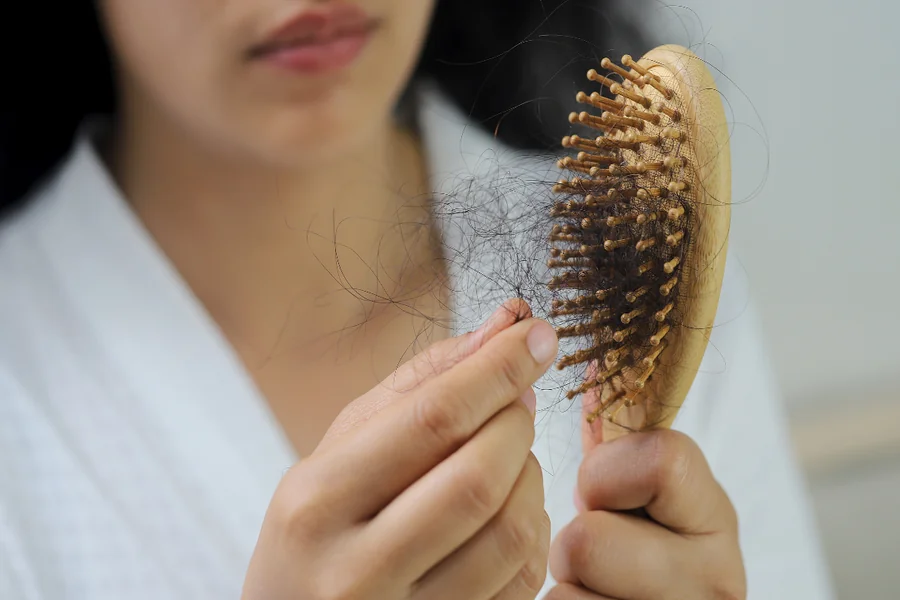
A few months after giving birth, many new parents notice hair collecting in the shower drain, on the pillow and in the hairbrush. It’s alarming, especially on top of sleepless nights. The reassuring news is that postpartum hair loss is common, temporary and well understood, and you can support healthy regrowth along the way.
Why postpartum hair loss happens
During pregnancy, high estrogen levels extend the growth phase of the hair cycle. Hair that would normally shed stays in place, which is why many people enjoy thicker, fuller hair while pregnant.
After delivery, estrogen drops quickly. All that extra hair shifts into the resting phase at once, and about two to four months later, it sheds. The medical term is telogen effluvium. It’s a timing shift, not damage to your follicles.
Normal shedding is about 50 to 100 hairs a day. Postpartum shedding can be much higher and is often most noticeable around the temples and hairline. Other factors can add to it:
- Nutrient depletion: Pregnancy and breastfeeding draw on iron, zinc and other stores.
- Sleep deprivation and stress: Both push more hair into the resting phase.
- Thyroid changes: Postpartum thyroiditis affects some new parents and can worsen shedding.
How long postpartum hair loss lasts
Shedding usually starts two to four months after birth and peaks around the four-month mark. For most people, hair returns to its normal cycle within six to twelve months, often by the baby’s first birthday. Short regrowth around the hairline is a good sign your follicles are back on track.
While you wait, these steps can support healthy regrowth:
- Keep taking your prenatal vitamin if your provider recommends it, especially while breastfeeding.
- Fill nutritional gaps. Iron, vitamin D, zinc and protein all matter. Thoughtfully formulated hair supplements can help, but check with your doctor first if you’re nursing.
- Know what the experts suggest. This roundup of dermatologist recommended vitamins for hair growth explains which nutrients have the strongest evidence.
- Be gentle. Skip tight ponytails, use a wide-tooth comb and lower the heat on styling tools.
- Try a fresh cut. Shorter layers can make thinning less noticeable while hair grows back.
If you used a popular hair supplement before pregnancy, you might look for a nutrafol alternative that better fits your postpartum needs and budget. Compare ingredients and doses before switching.
Talk to your provider if shedding continues beyond a year, you notice bald patches, or you’re dealing with fatigue, weight changes or feeling cold often. These can point to thyroid problems or iron deficiency that need treatment.
Above all, be patient with yourself during this season. Your body has done something remarkable, and shedding is a normal part of recovery. Focus on nourishing meals, rest when you can and gentle hair care, and your hair will return in its own time.