
Flying With a Psychiatric Service Dog: A Full Breakdown
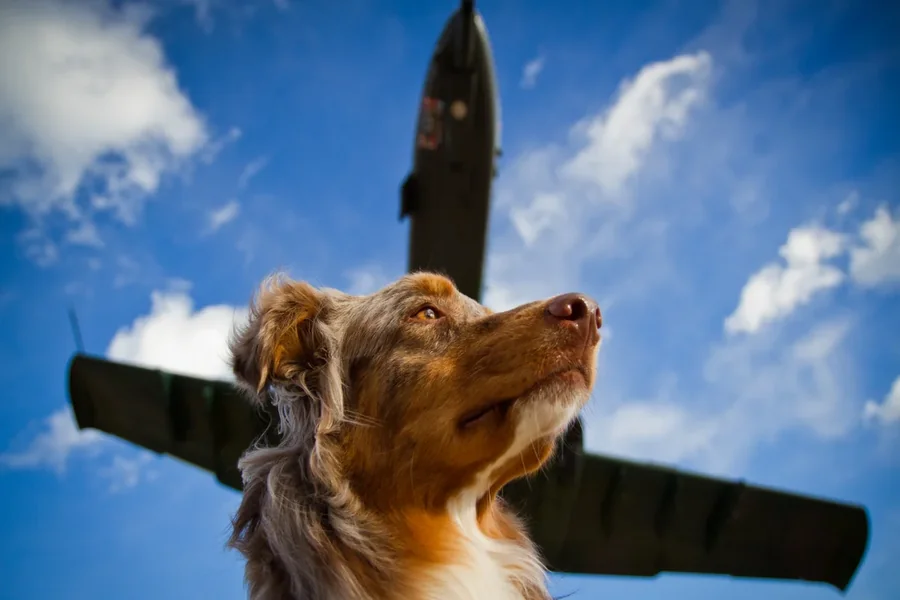
Flying with a psychiatric service dog isn’t the same as flying with a regular pet or an emotional support animal. In fact, many psychiatric service dogs are trained for air travel, including situations with crowds, narrow aisles, and getting in line with hundreds of people.
If you’re wondering what it is like to fly with a psychiatric service dog, including the laws that cover this process, we’re here to guide you through everything you need to know. Read on to learn all about flying with a psychiatric service dog.
What Is a Psychiatric Service Dog?
A psychiatric service dog (PSD) is a dog that’s individually trained to perform tasks for a person with a psychiatric disability. These tasks, which qualify a dog as a psychiatric service dog, provide protections under the Air Carrier Access Act (ACAA) and the Americans with Disabilities Act (ADA).
Ultimately, the federal law allows psychiatric service dogs to fly in the passenger cabin of a commercial aircraft without complying with airlines’ pet travel policies. This also includes waiving pet travel fees, since psychiatric service dogs are there because of a disability and airlines cannot charge individuals for their disability accommodations.
While this briefly covers what a psychiatric service dog is, there’s much more to cover. For a deeper dive, read this PSD guide from US Service Animals, one of the leading organizations in this space.
Flying With a Psychiatric Service Dog – A Step-by-Step Breakdown
Under the Air Carrier Access Act, airlines must treat psychiatric service dogs differently from regular pets and emotional support animals, but this doesn’t mean that you can just enter any flight with a PSD casually. You must follow a process, which we cover in detail below.
1) Confirm Your Dog Qualifies
Before anything else, be certain that your dog meets the standard you will be attesting to, which is individual training to perform specific tasks for your disability, which can be anything from deep pressure therapy to medication reminders. Also, your animal must be well-behaved and in control at all times. Airlines may lawfully refuse a dog that growls or barks at other passengers persistently. The same goes for a dog relieving themselves inappropriately.
2) Read Your Airline’s Service Animal Policy
While the ACAA sets the rules, each airline publishes its own service animal procedures on top. This covers how to submit paperwork, deadlines, and any route-specific rules that you must follow. Read your carrier’s current policy when you book to ensure everything will go as smoothly as possible.
3) Complete the DOT Service Animal Forms
US Airlines may require the Department of Transportation’s Service Animal Air Transportation Form, with which you attest to your dog’s training, health, vaccination status, and behavior. If the flight you’re taking is eight hours or longer, the airline may also require a second DOT form attesting that your dog either won’t need to relieve itself on the flight or can do so in a sanitary manner.
4) Notify the Airline
After completing the forms, notify the airline in advance that you will be flying with a service animal and submit the Department of Transportation forms. This step is critical, as some airlines may require you to do this up to 48 hours before departure.
5) Prepare Your Dog for Travel Day
Once all the paperwork is in order, prepare your dog for the travel day. It is best to exercise them thoroughly before leaving for the airport, keep the food light in the preceding hours, and manage water sensibly for the flight length. Pack their essentials in your carry-on and make sure to have them wear a harness that identifies status as a PSD; though this isn’t a legal requirement, it can help navigate through crowds.
6) Navigate Security and the Airport
At the TSA screening, you and your dog go through together, typically by walking through the detector with the dog leashed, and the officer may screen the dog’s gear. Once through security, use the airport’s service animal/pet relief areas to give your dog one last chance to relieve themselves before the flight.
7) Board the Flight
If offered, preboard the flight so that you and your dog can settle before the aisle fills. On the flight, your PSD stays on the floor at your feet, on leash or harness, not in the aisle or emergency exits. If your PSD is small enough, they may stay on your lap. Regardless of your dog’s training, always keep water offers small, reward calm behavior, and let your PSD do their own.
Flying With a Psychiatric Service Dog Safely and Without Issues
The safety list for flying with a psychiatric service dog is short and practical. Book direct flights where you can, since layovers multiply the relief-timing challenges. Carry your paperwork in both print and on your phone, know your rights well enough to state them calmly, and remember that the airline’s one legitimate demand is behavior, which your preparation and practicing real-life scenarios can help control.